 zamph5.com
Welcome to the Worst Office on Earth: Scam With Your Friends Is a Workplace Sitcom Where Everyone Should Be Fired
There are many ways to spend a day at the office. You could answer emails, attend meetings, finish a spreadsheet, and pretend that the mysterious noise coming from the break room is somebody else's problem.
Or you could clock in at the most disastrous call center imaginable.
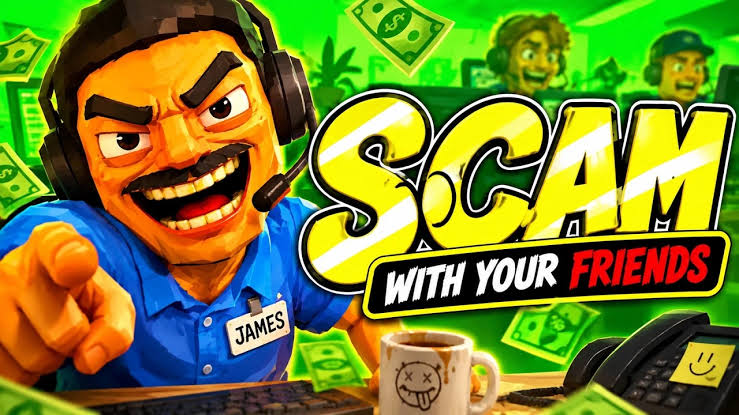
Welcome to Scam With Your Friends, a comedy simulation built around a fictional scam operation where players work together, interact with AI callers, chase daily earnings targets, and try to survive the chaos of their increasingly ridiculous workdays.
It begins like a job. It quickly turns into a test of patience, improvisation, teamwork, and friendship. Your colleagues are not necessarily competent, your callers refuse to behave like predictable characters, and the boss has very little interest in hearing that everything went wrong for reasons beyond your control.
The result feels less like a traditional office simulator and more like a workplace sitcom in which every shift is a new episode—and every episode has a disturbingly high chance of ending with everyone in trouble.
1. Human Resources Has Made a Terrible Mistake
Every great workplace comedy begins with a collection of people who should probably never have been hired together.
One employee is convinced they are the smartest person in the room. Another has the attention span of a goldfish. A third treats every minor task like an emergency broadcast. Then there is the coworker who insists they have everything under control immediately before making the situation ten times worse.
In Scam With Your Friends, the multiplayer format creates space for exactly this kind of chaos.
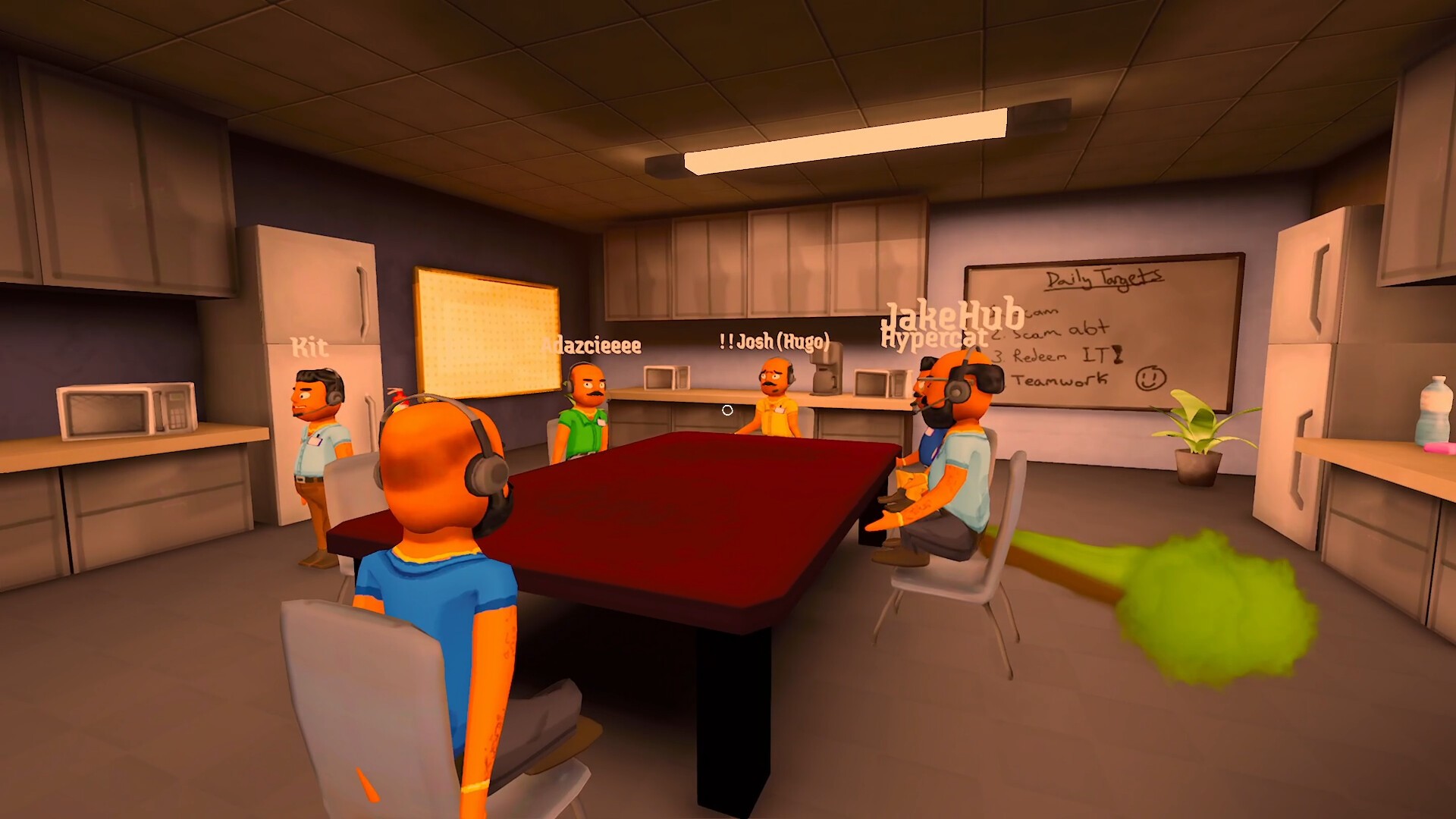
Even when everyone understands the objective, that does not mean everyone will approach it in the same way. One person may concentrate on the calls, another may become distracted by the in-game computer, and someone else may decide that the best solution to a growing problem is to improvise something nobody discussed.
The comedy comes from the gap between what the team is supposed to be doing and what the team actually does.
A perfectly reasonable plan can collapse because one person misunderstands the situation. A minor distraction can spread across the entire room. A coworker who was supposed to help may accidentally become the main reason everyone is behind schedule.
It is the familiar nightmare of group projects, except the project has a quota, the boss is furious, and the whole office seems determined to make bad decisions at the worst possible moment.
2. Every Phone Call Is an Unscripted Cold Open
In a scripted television comedy, the writer knows what the guest character will say. The actor knows the scene's direction. The audience waits for the punchline.
A conversation with an AI caller in Scam With Your Friends has a different kind of uncertainty: players cannot simply assume that the other side will respond according to a fixed script.
The game uses AI-driven dialogue to let fictional callers react dynamically to player conversations and actions. That makes each call a potential source of unpredictable comedy.
A conversation can begin calmly and then take a direction nobody expected. The caller might respond in a way that forces the player to rethink the situation. A teammate may hear part of the exchange and immediately invent a theory about what is happening.
Suddenly, the office has become a writers' room in the middle of a live broadcast.
The funniest moments often come from trying to maintain a straight face while the situation gets increasingly absurd. Players may be attempting to complete an ordinary in-game task, but their reactions, interruptions, and attempts to manage the conversation can create a comedy scene of their own.
And unlike a carefully edited television episode, there is no guarantee that the scene will end neatly.
Sometimes the result is a successful call. Sometimes it is a disaster. Sometimes the only thing the team can agree on is that nobody understands how the conversation reached that point.
That unpredictability is part of the game's central joke: the office may have a plan, but the next caller has not agreed to follow it.
3. The Daily Quota Is the Real Villain
Most workplace comedies have a character who creates pressure for everyone else. It might be an unreasonable manager, an impossible deadline, or a company policy so confusing that nobody remembers why it exists.
In Scam With Your Friends, the daily quota fills that role.
The team has a financial target to reach, and missing the required goal can put the workday—and the employees' imagined careers—at risk. That creates a simple source of tension: time keeps moving, the target remains visible, and every distraction feels increasingly expensive.
The quota does not care that a conversation went strangely. It does not care that a teammate became distracted. It certainly does not care that everyone has a very convincing explanation for why the shift did not go as planned.
The number is still there.
This transforms otherwise ordinary interactions into small dramatic moments. A promising call can feel like a breakthrough. An interruption can feel like a disaster. A teammate's sudden success can create excitement, envy, or a frantic attempt to catch up.
It also gives each workday a natural storyline. The team starts with an objective, encounters complications, and approaches the deadline with some combination of hope and panic.
The final result can feel like the ending of a workplace sitcom episode: either everyone narrowly survives, or the office has to face the consequences of another day of spectacular incompetence.
And tomorrow, the whole ridiculous process begins again.
4. Friendship Is Just Office Politics with Better Insults
Playing with friends changes the experience because everyone brings their own personality into the workplace.
A stranger in a public lobby may be a temporary colleague. A friend, however, is someone who can remind you about the disastrous decision you made three rounds ago—and will absolutely bring it up again when something else goes wrong.
The game creates opportunities for a peculiar form of teamwork. You need one another to get through the shift, but cooperating does not mean everyone will remain calm, focused, or supportive.
One friend might try to coordinate the team. Another may insist that they have discovered a brilliant solution. A third might spend the entire session questioning every decision, only to make the most questionable decision of all.
Nobody needs to write these personalities into the game. They emerge naturally from the people playing it.
That is why the social comedy can become just as memorable as the main objective. Players develop running jokes, assign blame for previous failures, celebrate unlikely successes, and construct elaborate explanations for what went wrong.
The office gradually becomes its own little fictional universe.
One player is always the overconfident employee. Someone else has become the team's unofficial crisis manager. Another is remembered as the person who cannot be trusted with a simple task.
The shift may eventually end, but the reputation survives.
5. Your Desktop Is a Tiny Museum of Bad Decisions
A conventional office desktop is designed to make work look organized. There are folders, applications, windows, and a sense that everything should have a sensible place.
Scam With Your Friends takes the familiar computer-based workplace and turns it into part of the game's comedy.
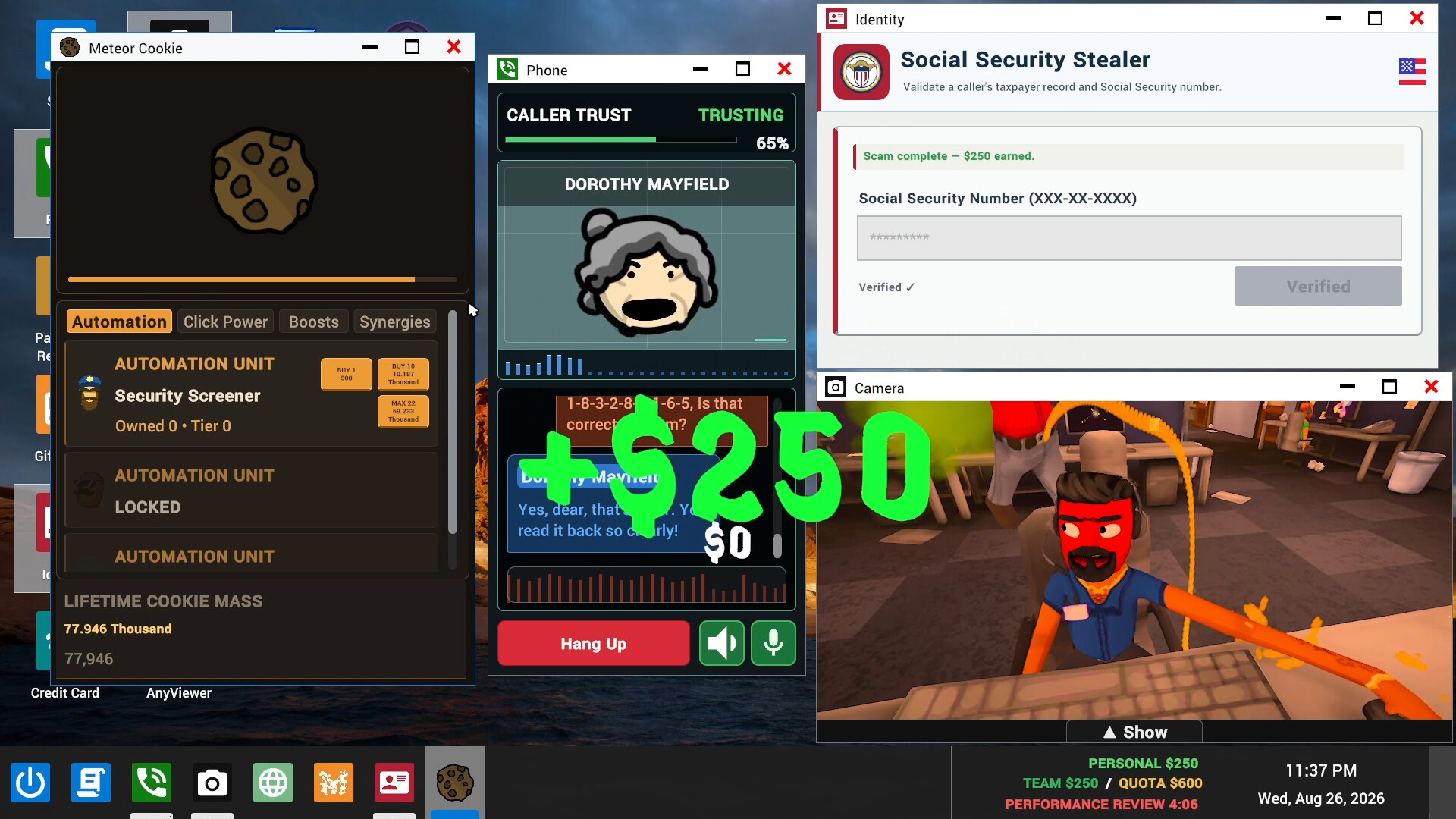
The fictional operation involves interacting with callers and using in-game computer tools as part of the workday. The broader gameplay also includes remote computer access and various workplace systems, giving players more to think about than simply answering a ringing phone.
This creates a useful contrast between the appearance of productivity and the reality of what is happening.
A player may be staring intently at the screen, switching between tasks with great urgency, and looking like the most productive person in the building. Meanwhile, the rest of the team may have no idea whether that activity is helping or making everything more complicated.
That is a classic office-comedy setup: a room full of people appearing busy while the actual situation becomes increasingly difficult to explain.
The desktop becomes a miniature stage for confusion. Each interaction is part of a larger workday, and the more pressure the team feels, the more dramatic even a small complication can become.
The funniest office is not necessarily the one where nothing works.
It is the one where everyone insists that everything is working perfectly while the chaos is happening directly in front of them.
6. The Office Has a Special Talent for Making Everything Worse
In most games, a problem is introduced so that the player can solve it. In a workplace comedy, the problem is often followed by three new problems that make the original one seem surprisingly manageable.
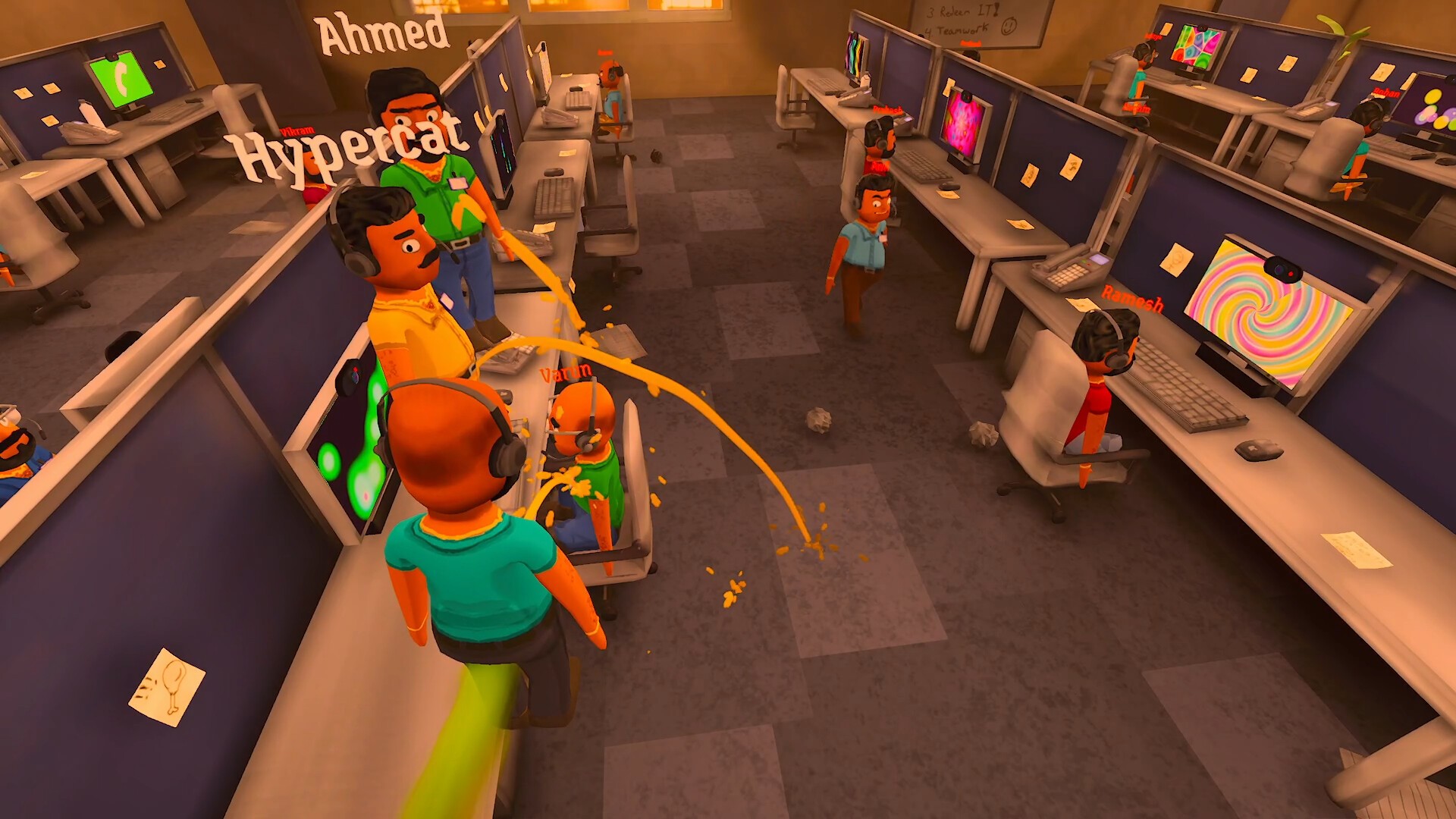
Scam With Your Friends leans into this sense of escalating absurdity through increasingly chaotic workdays and in-game disruptions. The official description includes hazards such as computer viruses, police raids, and other workplace disasters.
The important part is the contrast between the seriousness of the objective and the ridiculousness of the circumstances.
The team is trying to complete a workday. The office, meanwhile, appears to have its own agenda.
Just when everything seems manageable, an unexpected complication can demand attention. A player who was concentrating on one responsibility may suddenly need to react to something else. Teammates might have different ideas about which problem deserves priority, creating a second layer of confusion.
The situation becomes funny because everyone is attempting to behave rationally inside an environment that keeps rewarding panic.
Imagine a fictional television episode in which the employees are already behind schedule. Then an entirely unrelated office crisis develops, the manager begins demanding explanations, and two coworkers start arguing about whose responsibility it was to prevent the mess.
The plot practically writes itself.
In Scam With Your Friends, the ideal workday is one in which the team can keep moving despite the interruptions. The most memorable workdays, however, may be the ones where everything goes wrong in a completely unexpected order.
7. The Boss Is the Final Boss of Corporate Nonsense
Some video games end a level with an enormous monster. Others introduce an imposing rival or a formidable opponent who tests everything the player has learned.
A truly terrible workplace ends the day with a performance review.
In Scam With Your Friends, the team's progress and performance are evaluated by a demanding boss. The review gives the workday a clear endpoint, turning the previous minutes of calls, interruptions, and frantic activity into one final question: was all that chaos worth anything?
This is where the workplace-sitcom premise comes together.
A successful day can feel like a miraculous escape. Even if the office was a disaster, the team has something to celebrate. Players can look back at the ridiculous situations and claim that, somehow, the plan worked.
A bad day has a different atmosphere. Everyone suddenly remembers that they were contributing to the same objective, and the explanations start coming quickly.
One player blames the interruptions. Another claims that the plan was never realistic. Someone insists that the team would have succeeded if everyone had listened to them—which is particularly interesting if that person was responsible for the most memorable mistake of the day.
The boss's evaluation functions as the episode's final scene: a moment when the team discovers whether its frantic efforts were enough to survive.
And because the next workday can bring a fresh set of complications, even a successful review does not guarantee that the office will learn anything.
That may be the most realistic joke of all.
8. Every Shift Is a New Episode of the Same Terrible Show
A good sitcom needs a recognizable premise, but it also needs enough variation to keep the audience interested.
The core idea of Scam With Your Friends is easy to understand: work together in a fictional call center, deal with AI-driven conversations, aim for the required earnings, and survive the consequences of what happens during the shift.
The variety comes from how those elements interact.
Different callers can create different conversations. Teammates can react differently to the same problem. Unexpected events can disrupt a plan. A workday that begins with confidence can turn into frantic improvisation before the team reaches its goal.
The structure makes it easy to imagine each session as an episode with its own theme.
One episode might be about overconfidence. Another might revolve around a team trying desperately to recover from an early mistake. A third could feature one player who somehow becomes the office's only reliable employee—until they make a decision that proves they were never reliable in the first place.
The game does not need a traditional television script for these stories to emerge. The objective creates the situation, while player behavior and unpredictable conversations supply the comedy.
That also means that the most entertaining session may not be the most efficient one.
Sometimes the memorable part is a narrow success. Sometimes it is a spectacular failure. And sometimes the best moment is the completely inexplicable incident that nobody planned, but everyone will remember afterward.
9. The Real Competition Is Who Can Keep a Straight Face
There is a difference between a game that is funny because it contains jokes and a game that becomes funny because of what its players do.
Scam With Your Friends has a deliberately ridiculous premise, but the multiplayer experience also leaves room for humor to emerge naturally.
A player can react dramatically to a routine complication. A teammate can become obsessed with defending a questionable decision. An AI conversation can take a surprising turn, prompting everyone nearby to stop what they are doing and wonder what just happened.
These moments create stories that feel personal because they belong to the people who experienced them.
The funniest memory from a session may not involve the team's earnings or the final evaluation. It might be the time someone confidently explained a plan that nobody understood, or the moment a perfectly organized shift dissolved into a chorus of increasingly desperate reactions.
That kind of humor is difficult to manufacture on demand. It emerges from timing, personalities, and the unexpected collision between a game's systems and the people playing it.
The office becomes entertaining because it gives friends a shared setting for their own nonsense.
Eventually, the game becomes a source of recurring stories: the worst shift, the most ridiculous caller, the teammate who almost saved everything, and the person who somehow managed to make every situation worse.
Those stories can outlast the session itself.
10. Why This Terrible Job Makes Such Good Entertainment
A conventional work simulator often invites players to master a routine and become more efficient. A comedy simulation can take that familiar structure and turn it into something much less predictable.
Scam With Your Friends builds its identity around the collision between routine work and absurd circumstances. It has objectives, deadlines, callers, coworkers, and a demanding boss—but each component can contribute to a different kind of chaos.
The daily quota gives the team a reason to act. AI conversations make interactions less predictable. Workplace disruptions create interruptions, while the multiplayer format allows real personalities to become part of the comedy.
These elements reinforce one another.
A difficult conversation becomes more amusing when a friend is listening. A disruption becomes more frustrating when the team is already behind schedule. A poor performance becomes more memorable when everyone has their own explanation for what happened.
The result is a game that can be approached as a cooperative challenge, a social party experience, or a chaotic roleplay session where the office's fictional employees are often their own worst enemies.
Its central joke is simple: the characters are trying to do a job that nobody should want, under conditions that seem desi